All Activities
Grades PreK–2

Clixo Emotions

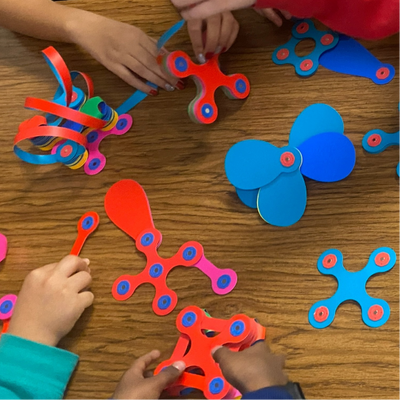
Use Clixo pieces to build shapes or faces representing different emotions. Explore and express feelings like happiness, sadness, and anger through creative play.

Download PDF Grades PreK–2
Clixo Emotions
Download PDF

Activity Overview

This activity guide encourages creativity, emotional literacy, and social interaction through hands-on learning with Clixo pieces. It helps young children explore and express their emotions in a safe, playful environment, building both their emotional and fine motor skills.

Objective

Help young children express and understand emotions through creative play using Clixo building pieces.

Clixo Emotions

Total Time

30–45 mins

Grade Level

Grades PreK–2

Skills

  • Creativity
  • Emotional literacy
  • Social interaction
  • Fine motor skills

Materials

Introduce

5-10 minutes

  • Begin with a Discussion: Start by talking to the children about emotions. Ask questions like, “How do you feel when you’re happy?” or “What does your face look like when you’re sad?”
  • Emotion Cards: Show the children the emotion cards, one by one. Discuss each emotion and ask the children to mimic the facial expression or share a time when they felt that way.
  • Storytime (Optional): Read a short story or show a video about different emotions to help the children relate to and recognize various feelings.

Build and Create

15-20 minutes

  • Introduction to Clixo: Briefly demonstrate how Clixo pieces can click together and be used to create different shapes.
  • Build an Emotion: Ask the children to pick an emotion card that represents what they are feeling today, and try to create a shape or face expressing that emotion using the Clixo pieces.
  • Example: For "happy," a child might create a round face with a big smile using curved pieces. For "angry," they might use more angular shapes to create a face with a frown or scrunched eyebrows.
  • Encourage Creativity: Let the children explore and build their own interpretations. Emphasize that there’s no right or wrong way to build—everyone’s feelings and creations are unique.

Share and Reflect

10-15 minutes

  • Show and Tell: Once the children have completed their builds, invite them to share their creations with the group. Ask each child to explain which emotion they built and why they chose certain shapes or colors.
  • Group Reflection: Discuss how different emotions might look different to everyone, and how it’s okay to express feelings in various ways. Encourage children to notice how colors, shapes, and sizes can represent different emotions.

Wrap-Up Activity (optional, 5-10 minutes):

  • Emotion Poster: On a large sheet of paper, help the children trace their Clixo creations or attach the pieces to the page by reinforcing them with Clixo pieces on the back to make a collective "Emotion Poster." Label each emotion and talk about how all emotions are important.
  • New Emotions: Ask children to see if they can alter the design into a new emotion by moving just a few Clixo pieces. Ask them to share how they think the emotion has changed, and the steps they took to change it.

Tips

  • Sensory Adaptation: For children who are sensory-sensitive, provide extra soft surfaces for easier handling.
  • Behavioral Support: Provide extra encouragement and positive reinforcement to children who may struggle with expressing emotions.
  • Communication Support: Use visual aids and simple, clear instructions for children who need additional language support. Allow them to point to emotion cards instead of verbalizing.
Download PDF