 Classroom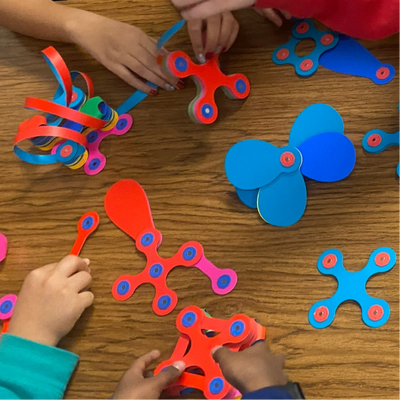

When Creativity Climbs the Walls: Discovering Unexpected Design with Clixo
By: Heidi Barber, Wayne County Public Schools
Clixo Ambassador 2025 – 2026
As a Clixo Ambassador and district Educational Technology Specialist, I had the opportunity to attend Rosewood Elementary’s Family STEM Night in February 2026. My goal for the evening was simple: create an open inquiry space where students could explore, build, and experiment with Clixo. I set up a hands-on table with the colorful magnetic pieces and a simple invitation: “What can you create?”

What unfolded over the next hour reminded me why open-ended materials like Clixo are so powerful. Students didn’t just build objects in their hands. They began designing with the environment around them.
What started as a building table quickly turned into something much more creative and unexpected.
Setting the Stage for Inquiry
Family STEM Night is always full of excitement. Students move quickly between stations, parents are curious, and the energy in the room is high. Rosewood Elementary took it a step further and included their book fair! Needless to say, the turnout was phenomenal.
Instead of giving step-by-step instructions, I designed the Clixo station as an inquiry table. Students could pick up pieces, experiment with the magnets, and see what kinds of shapes and structures they could invent.
Many students started with familiar ideas.
They made:
- spinning shapes
- 3D balls
- flowers
- bracelets
- abstract sculptures

The flexibility of the pieces immediately drew them in. Students noticed how the magnets snapped together, twisted, and folded. Some worked alone, while others collaborated with siblings or friends.
Within minutes, the table was full of imagination expressed through design.

A Creative Discovery
Then something unexpected happened.
A pair of students walked over to the gym wall behind us, featuring large silhouette figures. One silhouette showed two kids playing soccer face-to-face and another showed a baseball player mid-swing. Images that the students see each day as they attend gym class.
Instead of staying at the table, students began placing their Clixo designs directly onto the wall, using the silhouettes as part of their creations.

Suddenly the silhouettes became characters in their designs.
One student created a crown on the figure’s head. Another created glasses. Another added colorful shapes to form wings. Someone else built abstract shapes that looked like flowers growing beside the figure. Eventually, the crowned soccer player was even wearing Clixo-designed Nike Air Force 1 shoes.

The wall transformed into a collaborative art space.
Students weren’t just building objects anymore. They were designing around an existing image, treating the silhouettes as part of their structure.
It was completely unplanned.
And it was amazing to watch.

Designing With the Environment
What fascinated me most was how naturally this idea emerged.
No one instructed the students to use the wall. No one suggested adding to the silhouettes. The idea spread organically as students noticed what others were doing.
Soon the silhouettes became creative canvases.
Students experimented with:
- symmetry
- shape layering
- patterns
- character design
Some tried to extend the silhouette figures with new shapes. Others added decorative elements like crowns, flowers, belts, or abstract “energy bursts.”
They were essentially engaging in environmental design thinking.
They asked questions like:
- What would this character look like with wings?
- What happens if I extend this shape here?
- How can I balance this design?
This moment captured something powerful about inquiry learning: when students are given freedom, they often discover ideas adults never would have planned.
Why Open-Ended Materials Matter
Watching the students interact with Clixo reinforced something I’ve seen again and again in STEM learning: the most meaningful discoveries often come from exploration rather than instruction.
Clixo pieces invite experimentation.
Students can:
- twist them
- fold them
- snap them together
- reshape designs instantly
Because there is no single “correct” outcome, students feel comfortable trying new ideas.
And perhaps most importantly, they were following their curiosity.
A Lesson in Letting Go
As educators, we often plan activities with clear goals and outcomes.
But this experience reminded me that sometimes the most powerful learning moments come when we allow students to take the lead.
I set up a table for building.
Students turned it into a collaborative design wall.
Their creations grew beyond the table and into the space around them, transforming the environment into part of the activity.
That kind of spontaneous creativity is hard to script, but it’s exactly what makes hands-on learning so exciting.
Looking Ahead
This experience has changed how I think about designing future Clixo activities.
Next time, I might intentionally include:
- vertical building surfaces
- silhouette outlines
- background scenes students can build onto
By expanding the design space beyond the table, students can think not just about objects—but about how their designs interact with the world around them.
At Rosewood’s Family STEM Night, Clixo did exactly what it was designed to do.
It sparked curiosity.
It encouraged experimentation.
And it reminded me that sometimes the best STEM discoveries happen when creativity climbs the walls.

