 Classroom
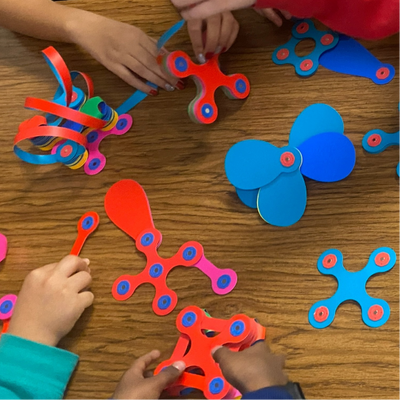
Optical Illusions (Grades 3-5)
by Laura KardysK-6 grade Art EducatorSchaumburg, IL
Create detailed optical illusions with Clixo pieces, made for grades 3–5.
Download PDF Grades 3–5
Activity Overview
Objective
Create detailed optical illusions using Clixo pieces, focusing on complexity and creativity.
Skills
- Creativity and Innovation
- Critical Thinking and Problem Solving
- Collaboration
- Design and Engineering Skills
- Communication
- Analytical Skills
Materials
Optical Illusions Examples


Introduce
Build & Create
Share & Reflect
Tips
Educational Standards
CCSS.ELA-LITERACY.SL.3.1Engage effectively in a range of collaborative discussions with diverse partners on grade 3 topics and texts, building on others' ideas and expressing their own clearly.
CCSS.ELA-LITERACY.W.5.2Write informative/explanatory texts to examine a topic and convey ideas and information clearly.
CCSS.MATH.CONTENT.4.G.A.3Recognize a line of symmetry for a two-dimensional figure as a line across the figure such that the figure can be folded along the line into matching parts. Identify line-symmetric figures and draw lines of symmetry.
1.4.C Innovative DesignerStudents develop, test, and refine prototypes as part of a cyclical design process.
1.6.D Creative CommunicatorStudents manage their personal data to maintain digital privacy and security and are aware of data-collection technology used to track their navigation online.